How to Choose a Diving Mask: Fit, Lens and Skirt Guide
The mask is the first piece of gear your customers will judge. A mask that fogs, leaks or pinches goes straight back on the shelf, so it pays to understand what separates a good one from a frustrating one.
Start with the fit test
Ask the customer to hold the mask against the face without the strap, inhale gently through the nose, and let go. A well-fitting mask stays in place on suction alone. If it drops or air leaks in around the nose or temples, try another size or shape. No strap can fix a skirt that does not match the face.
Single, double and panoramic lenses
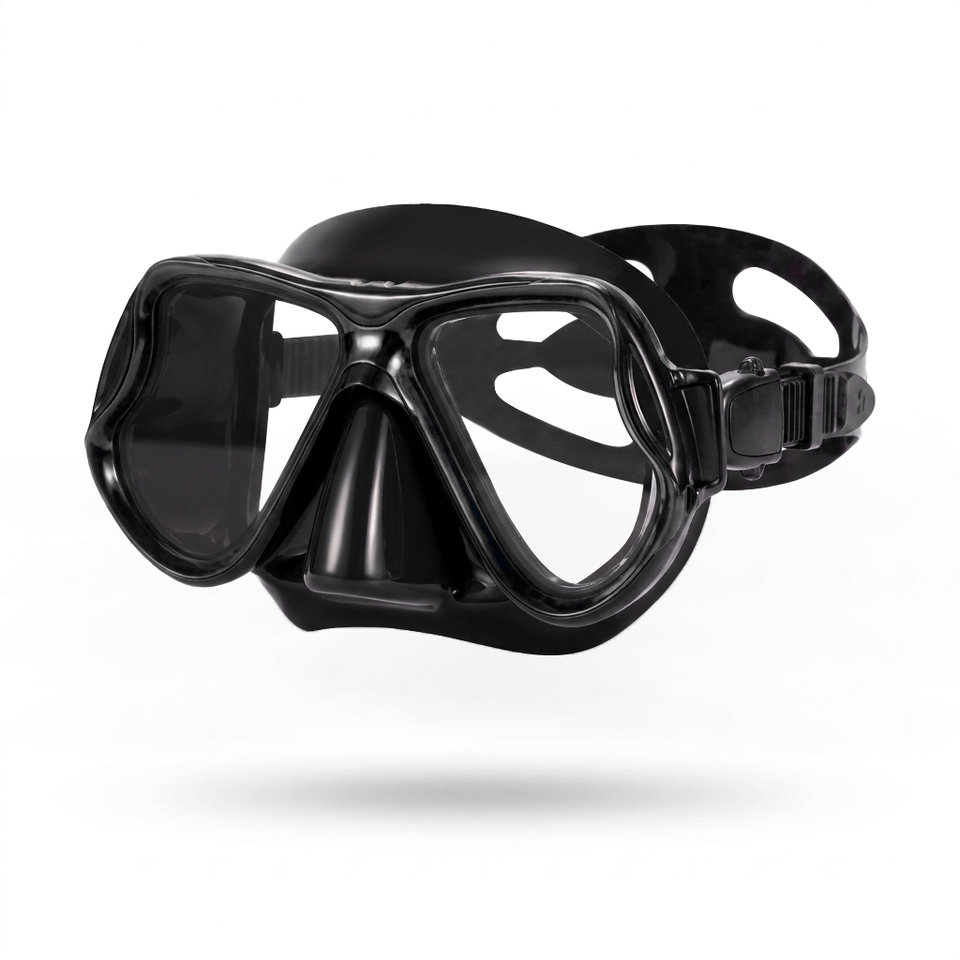
Single-lens masks give an unobstructed view and are popular for snorkeling. Double-lens models sit closer to the eyes, which lowers internal volume and makes clearing easier, and they can accept optical inserts on some models. Wide panoramic designs add side windows for peripheral vision, a favourite for guided snorkeling tours. For diving, always look for tempered glass rather than plastic lenses.
Silicone or PVC skirt
Silicone skirts are softer, seal better on more face shapes, and stay flexible for years. PVC skirts cost less and are fine for rental fleets and entry-level sets, but they stiffen over time. If your customers dive regularly, silicone is the safer recommendation.
Volume and frame style
Low-volume masks bring the lens close to the eyes. Freedivers and spearfishers prefer them because less air is needed to equalise the mask at depth. Frameless masks fold almost flat, which makes them a smart backup mask for technical divers and a compact option for travel retail.
A quick stocking tip
Cover the basics first: a panoramic snorkeling mask, a low-volume freediving mask, and a kids size with a smaller skirt. That trio answers most of the requests a dive shop hears every week.